14 4 Pre-experimental design Doctoral Research Methods in Social Work
Table Of Content
The employees can be measured at the end of the first month to see the improvement in their soft skills. The research design can still be useful for exploratory research to test the feasibility for further study. We founded our design practice a decade before founding Plant Prefab, and our design team helped develop Plant Prefab's innovative Plant Building System™.
community?
Implementing quality-of-care during labour, childbirth, and early postnatal care, northeast Namibia: a quasi ... - Journal of Global Health Reports
Implementing quality-of-care during labour, childbirth, and early postnatal care, northeast Namibia: a quasi ....
Posted: Mon, 11 Dec 2023 08:00:00 GMT [source]
But other units of assignment are possible and should be entertained in some research contexts. Time can be the unit of assignment, as, for example, in some drug research in which short-acting drugs are introduced and withdrawn, or behavior modification interventions are introduced and withdrawn to study their effects on the behavior of single patients. Settings can be the unit of assignment, as when different community health settings are given different treatments, or different intersections are given different treatments (e.g., photo radar monitoring of speeding in a traffic safety study). In a study of the effectiveness of the Sesame Street program, for example, different sets of commonly used letters (e.g., [a, o, p, s] versus [e, i, r, t]) could be selected for inclusion in the program.
Pre-Experimental Research Designs
People naturally impose their own assumptions about causes and needed actions, and these constitute, in the crudest sense, theories of the problem and the solution. A formal process of mapping objectives, evidence, and formal theories of behavior and social change to the design of coherent, practical interventions includes guidelines for how to assess evidence and theories (Bartholomew et al., 2006). The mapping of theory helps the decision maker fill gaps in the evidence and consider how the evidence from a distant source and a particular population may or may not apply to the local setting, circumstances, and population.
2 Quasi-experimental and pre-experimental designs
The above table tells us pretty much about the working of the pre-experimental designs. So we can say that it is actually to test treatment, and check whether it has the potential to cause a change or not. For the same reasons, it is advised to perform pre-experiments to define the potential of a true experiment. Finally, if a researcher cannot identify a sample that is large enough to split into control and experimental groups, or if they simply do not have access to a control group, they may use a one-group pre-/posttest design. In this instance, pre- and posttests are both taken, but there is no control group to compare the experimental group to.
Types of Pre-experimental Designs
In static-group comparison design, the two groups are observed as one goes through the treatment while the other does not. The pre-experimental approach helps give some sort of guarantee that the experiment can be a full-scale successful study. We helped design the first home ever to achieve LEED for Homes Platinum certification and have since completed dozens more LEED Platinum and Gold-certified projects. As one of the industry’s most experienced designers of healthy, sustainable, high-performance housing, we are experts in net-zero energy design and can support most third-party certifications. Even if sustainability is not a key requirement for your project, we will design for occupant health and comfort, ensuring excellent indoor air quality and energy efficiency.
Advantages of Pre-experimental Designs

Even research projects that do not involve administering necessary medications or treatments may limit the researcher’s ability to conduct a classic experiment. Any pretest–posttest design may be subject to plausible versions of one or more of these threats to its level of certainty (internal validity) depending on the specific research context, making it very difficult to conclude that a causal effect of the treatment has occurred. Once again, following Campbell’s tradition, the strategy of adding design elements to address specific plausible threats can help provide more confidence that the treatment rather than other confounding factors has had the desired effect. For example, replicating the pretest–posttest design at different times with different cohorts of individuals can help rule out history effects, while taking several pretest measures to estimate the maturation trend in the absence of treatment can help rule out history.
Types
In comparative experiments, animals are split into groups, and each group is subjected to different interventions, such as a drug or vehicle injection, or a surgical procedure. The sample size is the number of experimental units per group; identifying the experimental unit underpins the reliability of the experiment, but it is often incorrectly identified (Lazic et al. 2018). The experimental unit is the entity subjected to an intervention independently of all other units; it must be possible to assign any two experimental units to different comparison groups. For example, if the treatment is applied to individual mice by injection, the experimental unit may be the animal, in which case the number of experimental units per group and the number of animals per group is the same. However, if there is any contamination between mice within a cage, the treatment given to one mouse might influence other mice in that cage, and it would be more appropriate to subject all mice in one cage to the same treatment and treat the cage as the experimental unit. In another example, if the treatment is added to the water in a fish tank, two fish in the same tank cannot receive different treatments; thus the experimental unit is the tank, and the sample size is the number of tanks per group.
Professional values at the beginning of medical school: a quasi-experimental study - BMC Medical Education - BMC Medical Education
Professional values at the beginning of medical school: a quasi-experimental study - BMC Medical Education.
Posted: Fri, 08 Mar 2024 08:00:00 GMT [source]
In the Campbell tradition, causal inferences drawn from the basic ITS design can be greatly strengthened by the addition of design elements that address threats to validity. Khuder and colleagues included another, similar Ohio city that did not institute a smoking ban (control series), finding no parallel change in heart disease admissions after the March 2002 timepoint when the smoking ban was introduced in the treatment city. They also found that hospital admissions for diagnoses unrelated to smoking did not change in either city after March 2002 (nonequivalent dependent variable). In some time series applications, a design element known as switching replications can be used, which involves locating another, similar city in which the intervention was introduced at a different timepoint.
Chapter 5.2 Pre-Experimental Design
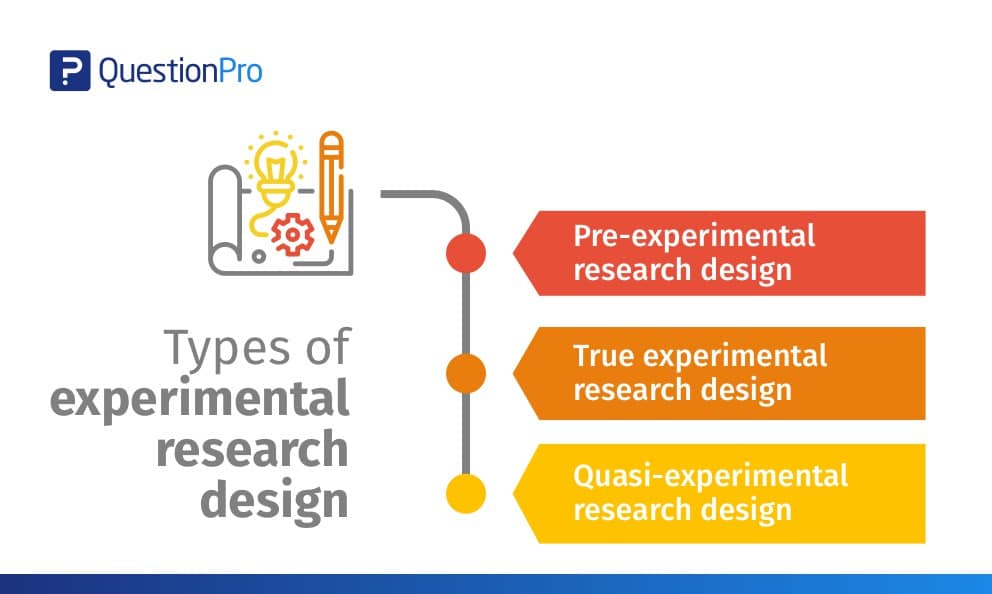
Proper modeling of the relationship between the assignment variable and the outcome permits a strong inference of a treatment effect if there is a discontinuity at the cutpoint. As implied by the preceding examples where we considered studying the impact of Hurricane Katrina, experiments do not necessarily need to take place in the controlled setting of a lab. Researchers using this design must be extremely cautious about making claims regarding the effect of the stimulus, though the design could be useful for exploratory studies aimed at testing one’s measures or the feasibility of further study. In our example of the study of the impact of Hurricane Katrina, a researcher using this design would test the impact of Katrina only among a community that was hit by the hurricane and not seek out a comparison group from a community that did not experience the hurricane. Three common types of pre-experimental designs include the one-shot case study, the one-group pretest-posttest design, and the static-group comparison. These designs offer a starting point for researchers but are typically seen as less reliable than more controlled experimental designs due to the lack of randomization and the potential for confounding variables.
There are more comprehensive planning guidelines specifically aiming at early experimental design stage. Most of them have been developed for a specific research field but carry ideas and principles that can be transferred to all forms of in vivo experiments. Notable are, for example, the very detailed Lambeth Conventions (Curtis et al. 2013) (developed for cardiac arrhythmia research), from Alzheimer’s research recommendations by Shineman et al. (2011) and generally applicable call by Landis et al. (2012). Wu and colleagues (2008a,b; see also West and Thoemmes, 2010) used these procedures in a study of the effect of retention in first grade on children’s subsequent math and reading achievement.
Many argue that only external costs should be considered when making decisions about whether policy interventions are warranted. In conclusion, pre-experimental design, while limited in its ability to provide strong evidence of causality, plays a crucial role in exploratory research. It presents a simplified and cost-effective approach to experimentation that is especially useful when resources are limited or when the goal is to explore a new area of study. However, the inherent limitations of pre-experimental designs necessitate caution in interpreting their results.
An important drawback of pre-experimental designs is that they are subject to numerous threats to their validity. Imagine a researcher who is interested in the effectiveness of an anti-drug education program on elementary school students’ attitudes toward illegal drugs. The researcher could assess students’ attitudes about illegal drugs (O1), implement the anti-drug program (X), and then immediately after the program ends, the researcher could once again measure students’ attitudes toward illegal drugs (O2). You can see how this would be relatively simple to do in practice, and you may have been involved in this type of research design yourself, even if informally.
A single group is studied at a single point in time after some treatment that is presumed to have caused change. The carefully studied single instance is compared to general expectations of what the case would have looked like had the treatment not occurred and to other events casually observed. The EDA can then also generate a randomization sequence or compile a report of the planned experiment that can, e.g. be part of a preregistration of the experimental protocol.


Comments
Post a Comment